College Football Ethnography
For a season, I traded my desk for the sideline: embedded with Holy Cross football as their video operator, doing the coaches' job to design for them from the inside.
Role
Product Designer · sideline video operator
Duration
A full season, 2024
Method
Ethnographic field work
Team
Holy Cross Football
Why live it
Coaches don't have time for interviews. Their week is a sprint from one game to the next, and the calendar has no slack for a product designer's questions. And even when you do get the conversation, you get the version they can tell you, not the version they live.
What people say, what people do, and what they say they do are entirely different things.
Margaret Mead
So when Coach Robbat called to ask if I'd fill Holy Cross's sideline video-operator seat for the 2024 season, my director, John Sakalowsky, told me to take it. A full season in the building, not a study with a hypothesis and a deliverable, but a chance to root my product judgment in the coaches' real world instead of my assumptions about it.
The method has a name: ethnographic field work. Cultural immersion to understand behavior in context. It doesn't replace structured interviews or validation. It sits underneath them, so that when I do design, I already know who these people are.
Earning my way in
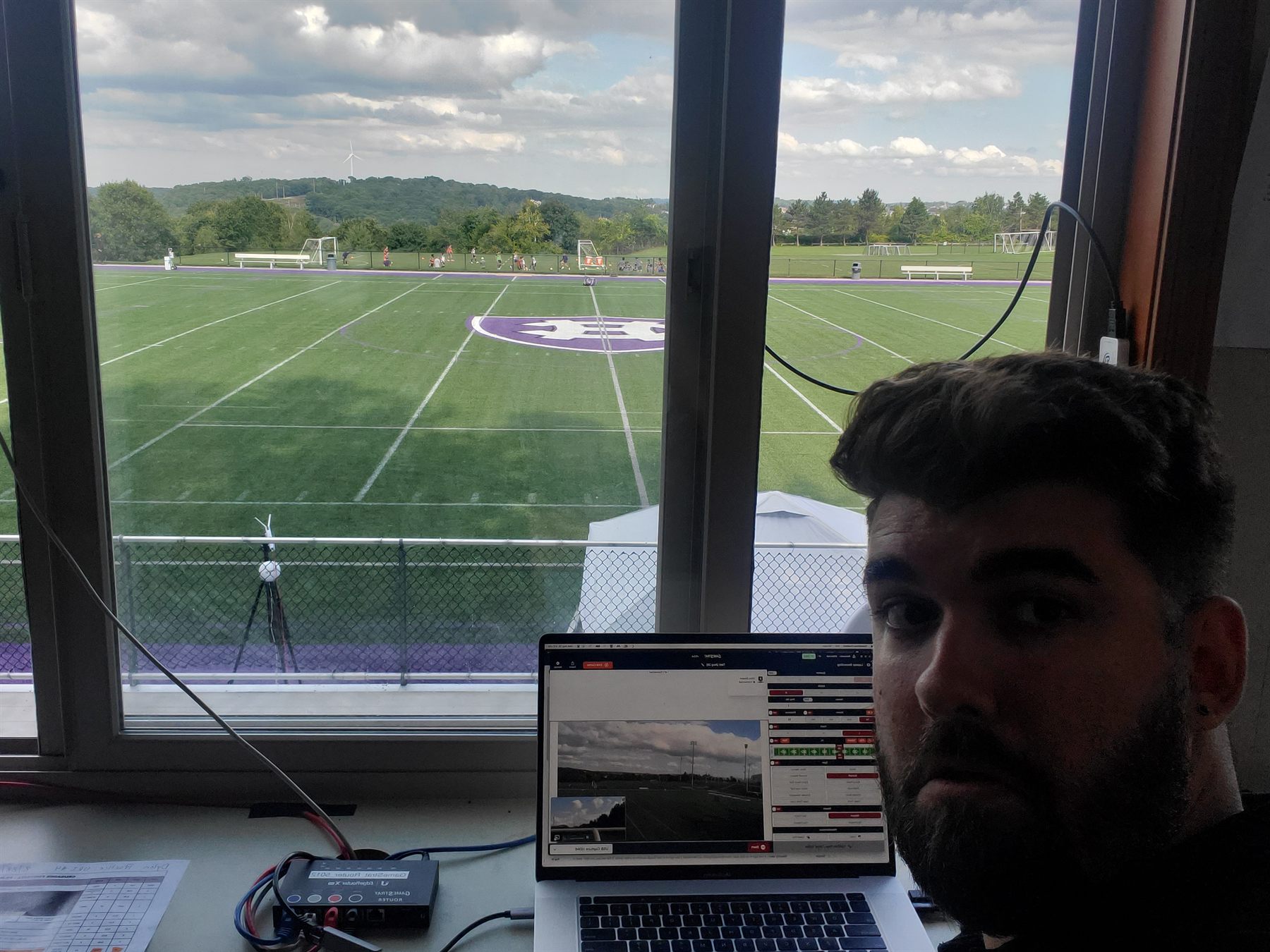
I wasn't there to watch from the back of the room. I did the job. Three of them, really. My main seat was the live-clipping station: tagging every play the instant it ended so the coaches upstairs had sideline video to review in near-real time. It's a spacebar-and-nerves job, and there's no undo during a drive. By the end of the season I was landing about 99% accuracy, missing maybe one tag a game.
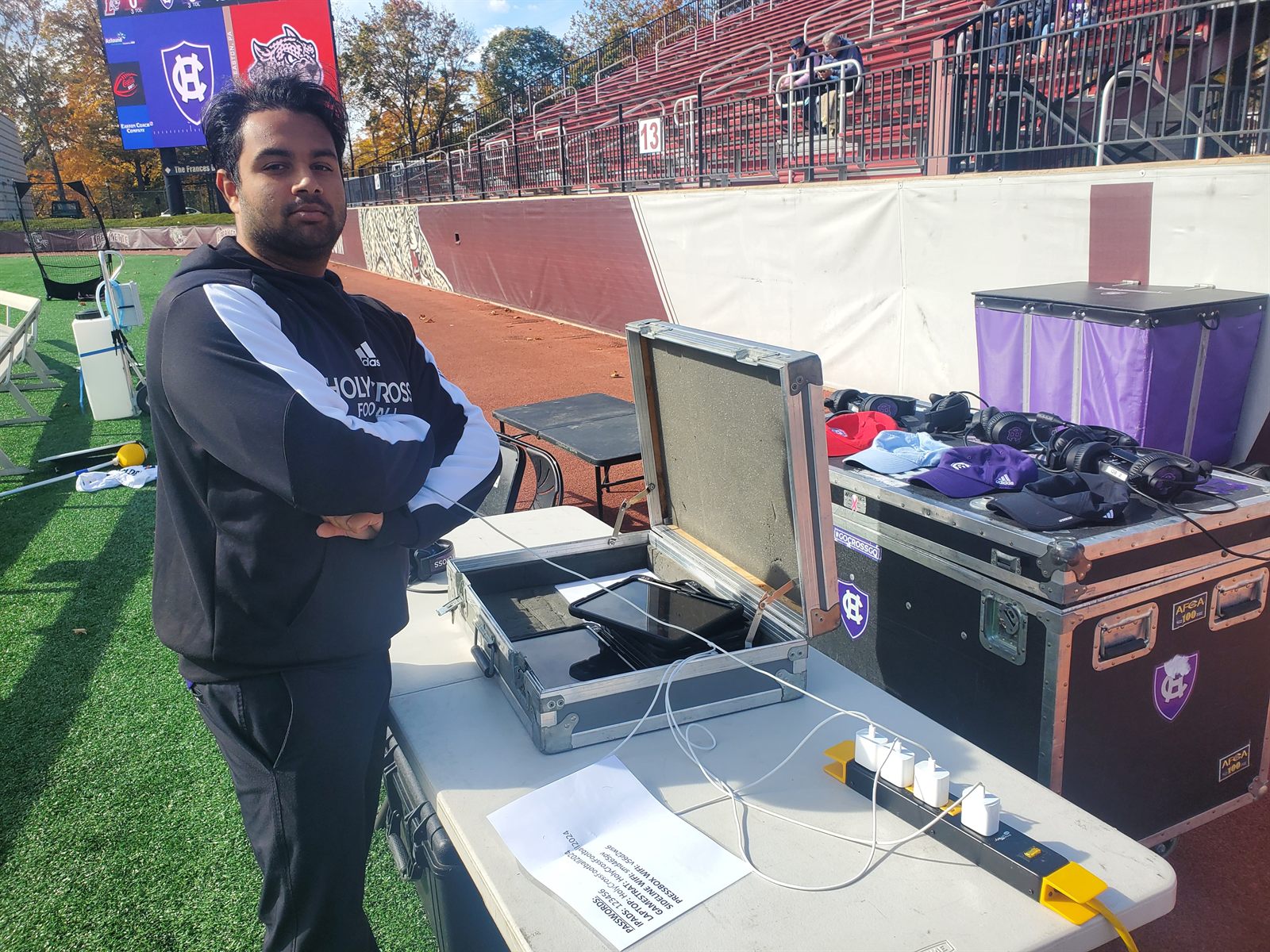
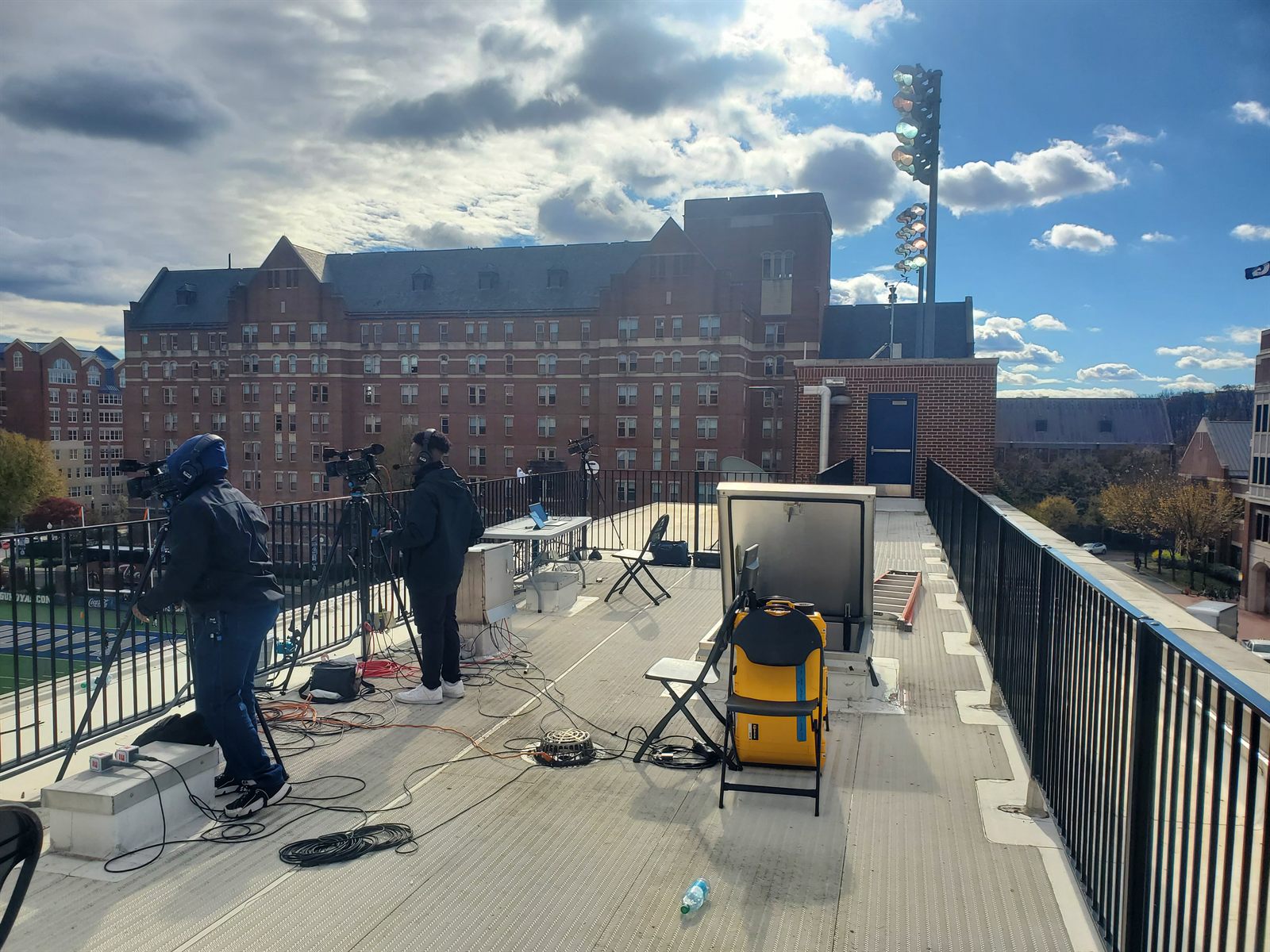
When the gear failed, I was IT. One game the endzone camera's connector tore loose forty minutes before kickoff; I spent twenty of them on the phone with support, sprinting between the camera and my laptop, and slid back into the clipping seat with about thirty seconds to spare. On setup days I was a grip, carrying three hundred-plus pounds of cases up the stadium stairs, twice a game, no elevator.
None of that is glamorous. That turned out to be the point.
Small value, delivered consistently over a season, beats big value delivered once. Coaches notice the former every single week.
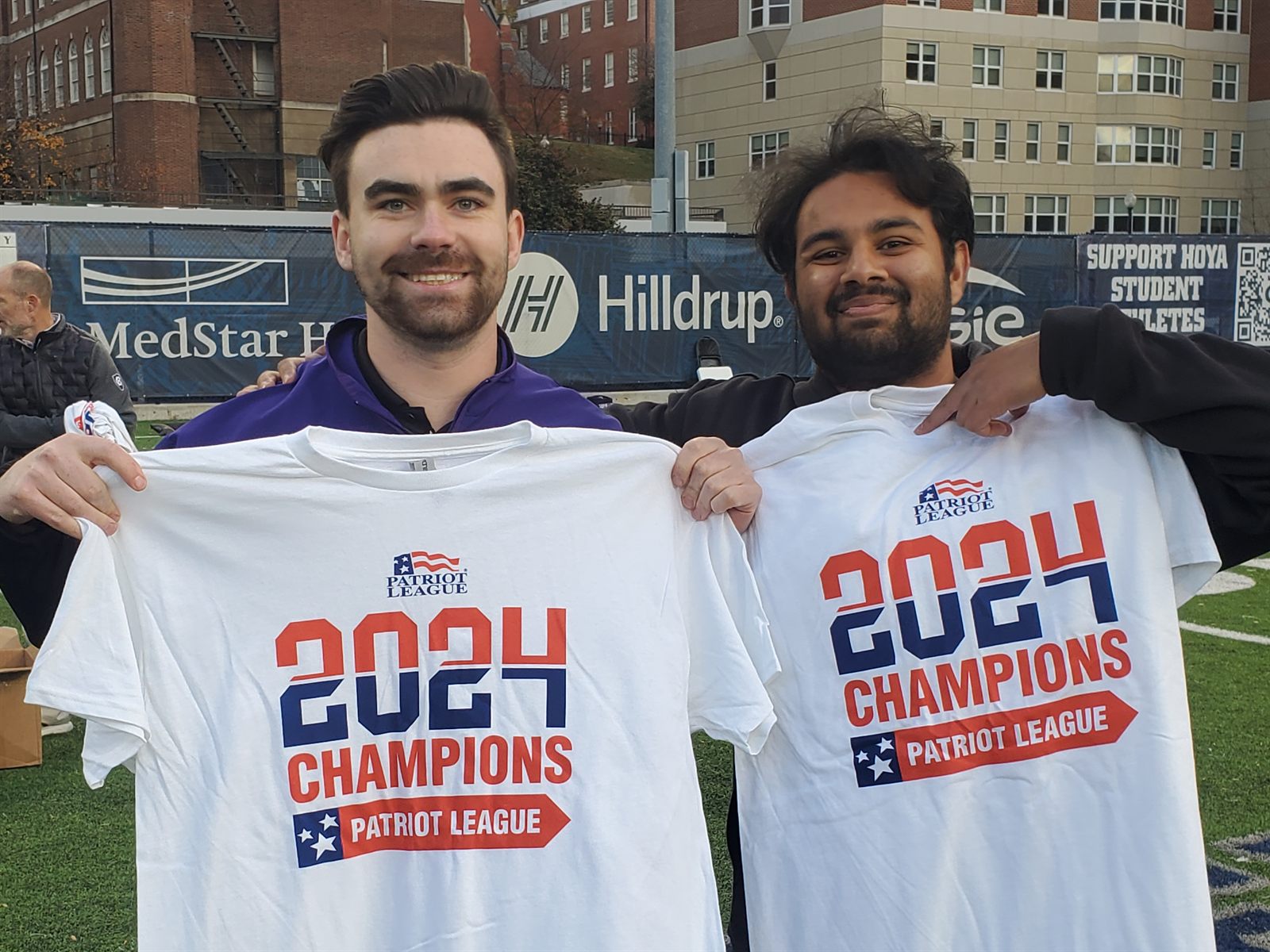
After the Georgetown game, a coach tried to wave off how much my little job mattered. The others shut it down, because I showed up, they had sideline video, and that was part of winning a championship. It reframed something I now carry into product work: reliability is a feature. The unshowy thing that just works, every time, earns more trust than the flashy thing that mostly does.
The coach's week, from the inside
From the clipping seat and the meeting rooms, the shape of the week came into focus: three pressures that run it, back to back, with no slack between them:
- Scouting the opponent: days to figure out who's coming and how they play.
- Installing the gameplan: getting that plan out of the coaches' heads and into the athletes', through meetings and practice.
- Game day: the deadline everything runs at, which I felt firsthand every Saturday.
What a spreadsheet of that week can't tell you is the cost of it. Saturday night, after an exhausting road trip, I'd hear coaches already mapping out Sunday morning's work. A lot of them have kids. Sitting in that, the job stopped being abstract: the hours a good tool saves a coach are hours they get back with their family. That's the outcome I design toward now: not "efficiency," but someone's evening.
Two kinds of coach
A staff isn't one user. Enough meetings in, two mindsets separate out, and they want different things from the same hour of film.
One is tactical. Coach Dresner, the offensive coordinator, built Holy Cross's playbook, and his questions ran to scheme and tendency: what this opponent does on third down. The other is developmental. Coach Robbat, the head coach, watched the same clips for the athletes in them: who's ready, who's slipping, who needs the rep.
I've done both — I've won with the wrong people and lost with the right ones.
Coach Dresner, offensive coordinator
He said it as the tactical half of that pair. He's won with people he wouldn't pick again and lost alongside people he would. The scoreboard is a poor measure of the group you had.
That makes the staff, not the coach, the right unit to design for. The same clip has to answer two questions at once: what the opponent does, and who on this side is ready for it.
One play at a time
The clearest design lesson came in the gameplan meetings, and I only caught it because I was in the room.
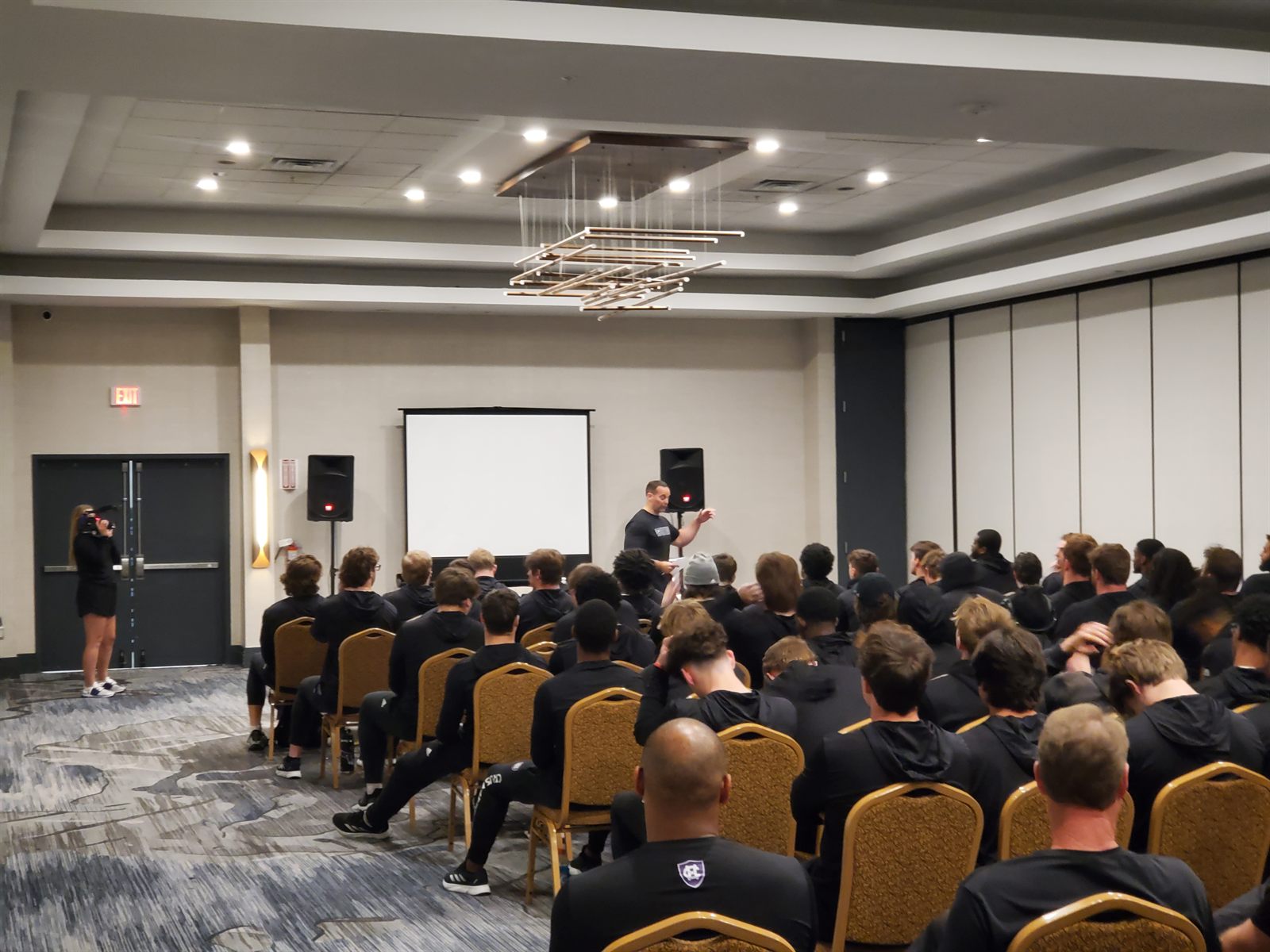
Coaches worked off a single display. To make a point, they'd show a play, then a clip of it, then another angle of that same clip, one after another, in sequence. Watching the athletes on the other side of that, the cost was obvious: meetings ran long, players sat through angles that didn't apply to them, and everyone had to hold the whole picture in their head, because they never got to see it at once.
That's a working-memory problem dressed up as a hardware habit. And it's the kind of thing you don't feel from a feature request. You feel it from the back of a meeting, watching attention drain out of the room.
It's why I pushed hard, back on the product, for simultaneous media projection: multiple angles and assets on screen together, so a coach can compare instead of recite, and for better telestration, so they can draw the point directly on the play instead of describing it. Shorter meetings, less irrelevant footage, less to hold in your head. The decision traces straight back to that room.
What it changed
The externship didn't produce a spec. It produced better-calibrated decisions, and it was part of a broader design-team effort to understand our users in context rather than from a distance. When I make a call about a coaching workflow now, I'm checking it against a season of watching coaches actually work, not against a persona.
Honest about the limits: ethnography isn't a substitute for structured discovery or validation. It works alongside them. Its job is narrower and deeper: knowing who the users are as people, so the rest of the process aims at the right thing.
Design principles
Reliability is a feature. Coaches value consistency over flash: value delivered dependably, no matter how small. The unshowy thing that always works earns the trust the flashy thing never quite does.
Design for the pressure, not the diagram. A coach's week on a workflow chart isn't the same as game day. The pressure, the fatigue, and the family time on the line are what separate the improvements that matter from the ones that don't.
Immersion beats assumption. The most useful insights aren't answers to questions worth asking in an interview. They surface only from doing the user's job. Time inside a user's world reveals what a stack of interviews can't.